Engines off, shore power on: Rotterdam's biggest clean energy bet

On a busy terminal at Maasvlakte II, a crane operator sits high above a quayside stacked with containers. Below, one of the world’s largest container vessels lies alongside, its diesel generators running at full tilt. The noise never stops. The air smells of fuel. On days when multiple ships are burning diesel at the same time - and the wind shifts to an unfavourable direction - the haze can turn toxic, exposing crane operators to polluted air and, at times, forcing work on the terminal to grind to a halt.
"That is a very concrete problem, which several terminals looking for a solution have brought to our attention" says Joyce van Heijningen, Manager Operations at Rotterdam Shore Power (RSP). "Crane operators literally have to put down their work because they are sitting in a poisonous fog." It is not the first argument people use when discussing the energy transition in shipping and ports. But it is one of the most human, and most urgent.
Shore power (‘walstroom’ in Dutch) offers a straightforward fix: plug a ship into the electricity grid at the quay. Switch off its generators, and the noise, smell and emissions stop immediately. The concept is not new. But what RSP is doing in Rotterdam is new in scale, ambition and business model. By the time their Maasvlakte II project is fully operational in early 2029, Rotterdam Shore Power will connect over 6,000 vessels annually.
Business model: turning CAPEX into a service
This is where RSP truly distinguishes itself. Terminals and shipowners do not invest in the infrastructure - RSP does. The company Designs, Builds, Finances, Operates and Maintains shore power installations end-to-end. The investment is recouped through the energy services over the contract lifetime. "The CAPEX sits with us," says Arkesteijn. "We convert it into OPEX for the client. The more ships use the installation, the lower the price per kilowatt-hour."
Removing barriers for shipowners
This DBFOM model - Design, Build, Finance, Operate, Maintain - removes the biggest barrier to adoption: upfront investment risk. RSP handles the complexity of permits, grid connections, engineering and construction of the technical installation, 24/7 operations, and thereby fully supports terminals’ obligation to offer shore power. On the other hand, RSP provides shore power connection services directly to liners, supporting them in meeting compliance requirements while at berth.
Liners calling at the Port of Rotterdam request a shore power connection, after which RSP coordinates the connection and disconnection of the vessel. Payment is based on the vessels’ actual electricity consumption.
2.5 MWh
The power demands involved are striking. A single large container ship requires approximately 2.5 megawatts per hour at berth. “That is comparable to four full Feyenoord Stadiums on a matchday,” says Arkesteijn. “For reefer-heavy vessels loaded with refrigerated fruit from South America, demand climbs even higher. Delivering that reliably across 8 kilometres of quay, at 35 connection points, for up to 6,000 vessel calls per year, is an operational undertaking of real complexity.”
The world's largest project, and ahead of schedule
The Maasvlakte II project of Europe’s largest port (and the world’s most efficient one, judging from the year-on-year awards it has received for that) covers four deep-sea container terminals: ECT Delta, ECT Euromax, APMT Maasvlakte II, and ECT DDN.
Rotterdam Shore Power selected ABB in January 2026 to engineer, build and maintain the installations, with construction starting in the second half of 2026. At over 100 MVA combined capacity, it will be the largest shore power system in the world. Commercial operations begin mid-2028, two years ahead of the EU's mandatory deadline.
That deadline is approaching fast. From 1 January 2030, EU legislation under AFIR and FuelEU Maritime requires all container ships - and passenger and cruise vessels - above 5,000 gross tonnage, with at least 2 hours at berth to use shore power (or equivalent zero-emission technology) at EU TEN-T ports. In practice this means that terminals must connect ships 90% of their vessel visits within one hour, with fines falling on the ship if it fails to comply. RSP is building Rotterdam's answer to that obligation, and even beyond.
The market is waking up
Major global carriers are already contacting RSP, wanting to know whether installations will meet the international standard for high voltage (IEC 80005-1) and when they will be ready. "Nobody wants to be scrambling on 31 December 2029," says Van Heijningen.
Operational examples can be found in Hamburg and Barcelona, where shore power for container vessels has been live for two years. These projects have demonstrated that the technology works. Rotterdam is now taking the next step, building a system on a dramatically larger scale to serve all container vessels calling at the APM, ECT Delta, and Euromax terminals. RSP focuses on container terminals and other AFIRobliged segments, while also actively exploring opportunities in other segments, such as liquid bulk.
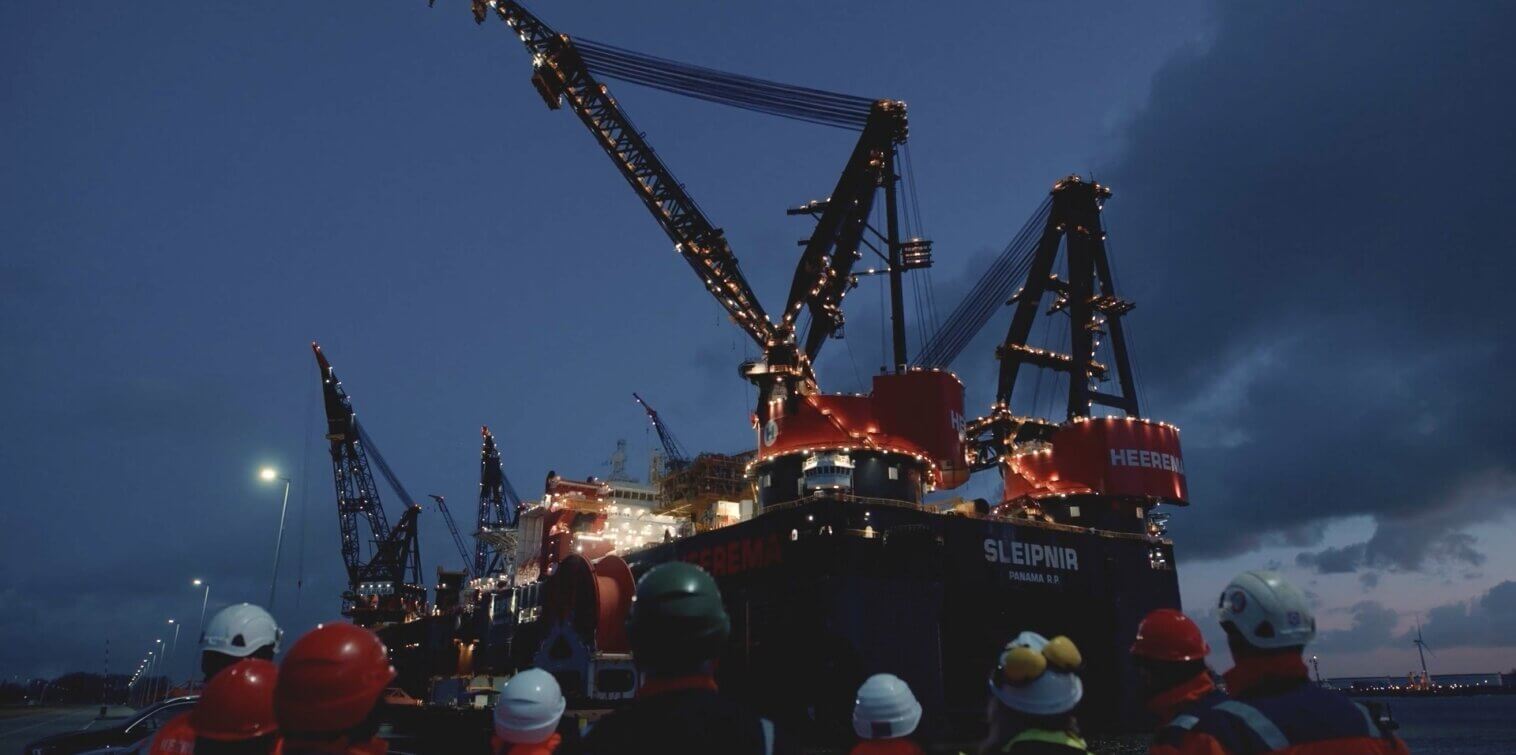
The commercial logic is sharpening too. As noted, connecting to shore power strengthened Heerema’s competitive position by reducing its supply chains’ carbon footprint. Shore power is increasingly becoming part of the value proposition that shipowners offer to their clients - an argument that will only gain weight as sustainable fuels continue to come at a premium.
Port, business, and government
It’s not only commercial and research partners working together. Regional, national and international government bodies are part of the process too. The Dutch government supports the ECT and APMT projects with subsidies through the Temporary Subsidy Scheme for Shore Power for Seagoing Vessels Climate of the Ministry of Infrastructure and Water Management, implemented by the Netherlands Enterprise Agency (RVO). The European Commission also supports them as part of the Alternative Fuels Infrastructure Facility (AFIF) within the Connecting Europe Facility (CEF) programme, and via the European Investment Bank.
Download the whitepaper
Decarbonisation is no longer a future challenge. It's a business opportunity. Discover 6 practical insights from Rotterdam Shore Power, Value Maritime and ZEDhub, and see how maritime companies are turning sustainability into competitive advantage.