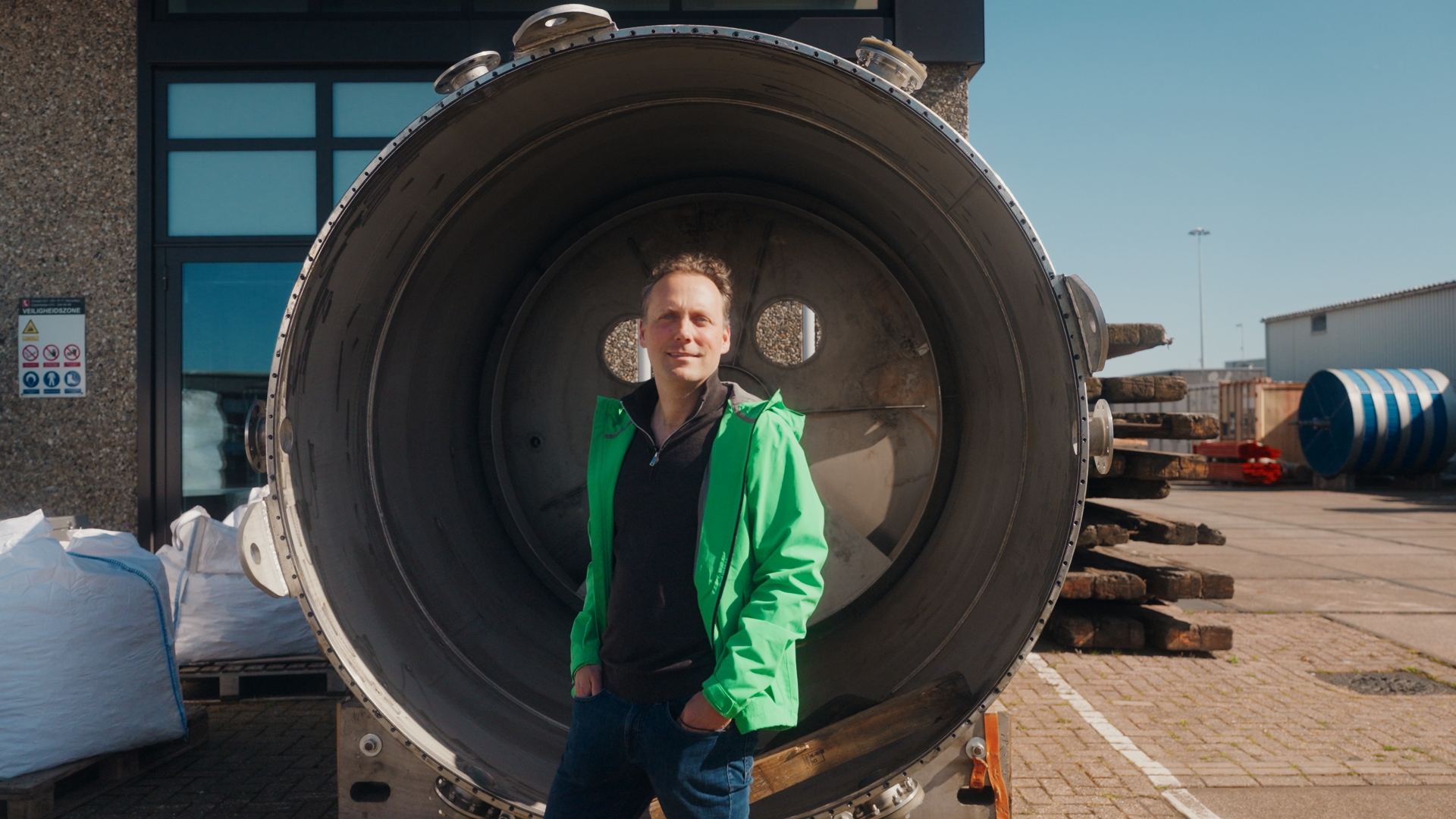
The Rotterdam region: a hub for innovation in zero-emission dredging
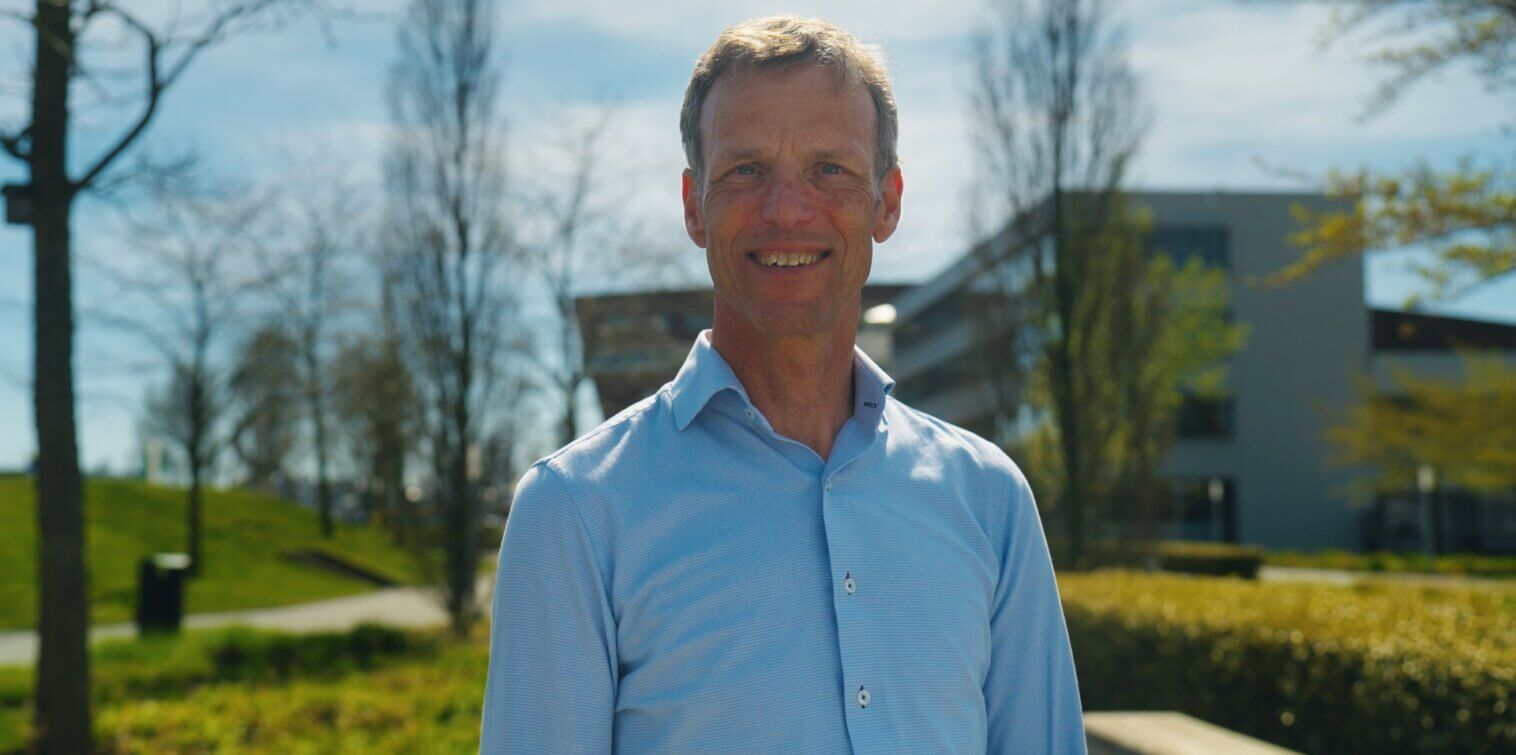
“The transition to zero-emission dredging is something no single company can achieve on its own,” says Sander Steenbrink, firmly. As a member of the ZEDhub Steering Board, Steenbrink outlines what is needed to make the dredging sector future-proof. The ambition is embedded in the name itself: Zero Emission Dredging hub - a pre-competitive collaboration across the sector, aimed at achieving zero emissions together. And it is precisely the wider Rotterdam region that offers the ideal ecosystem for this.
ZEDhub’s ambition is clear: to enable zero-emission dredging by 2030. Technologically, much is already possible. Yet progress depends on more than innovation alone. Regulations must align with market realities, and innovations must be supported by viable business models, for example by rewarding emission reductions in tender processes. In this way, the incentive for innovation is strongly regulation-driven, while at the same time contributing to the global climate challenge. “We are all dealing with extreme weather, flood risks, climate change, and local emissions,” says Steenbrink. “Reducing emissions is therefore not only a technical issue, but a societal one.”
A centre for progress
Addressing these challenges requires close collaboration. That’s why Boskalis, Damen, Royal IHC, and Van Oord joined forces with Smart Delta Drechtsteden (cooperation of industry, government and education in Dordrecht and surroundings) to shape the future of the dredging industry in the Netherlands. “The Netherlands is a leading country,” Steenbrink explains. “If you want to build, experiment or develop, this is the place to be.”
ZEDhub acts as a central platform where knowledge, human capital and end users come together, based on the Triple Helix model: industry, government and education. The industry represents the value chain: from suppliers to shipyards and dredging companies. Government bodies provide regulatory frameworks and funding. Education ensures the attraction and development of new talent.
For Steenbrink, the primary focus is on creating real impact: “We want to make a genuine difference with solutions that actually work.” This drive is also reflected in his role as a mentor at the startup platform PortXL and his participation in the Innovation Council of the Dutch Maritime Network.
The real challenge: the supply chain
While technology continues to advance, the main challenge lies elsewhere. Economic feasibility and the structure of the supply chain are the limiting factors for large-scale adoption to happen.
“The biggest challenges lie in the supply chain and the availability and affordability of sustainable fuels,” Steenbrink explains. “Hydrogen is still very difficult for deep-sea shipping. Methanol is more suitable, but availability and cost remain an issue; and currently it’s used for other purposes.”
ZEDhub plays a key role in bridging this gap. By bringing together partners within a compact geographical area, the Rotterdam region enables faster iteration, testing and scaling. Pilot projects have already demonstrated what this collaboration can deliver.
From pilots to practice
One example is the transformation of the Christiaan-P, an emission-free inland crane vessel developed by Van Oord in collaboration with Smart Delta Drechtsteden and the Port of Rotterdam. The vessel operates fully electric and is used for construction projects such as shoreline protection.
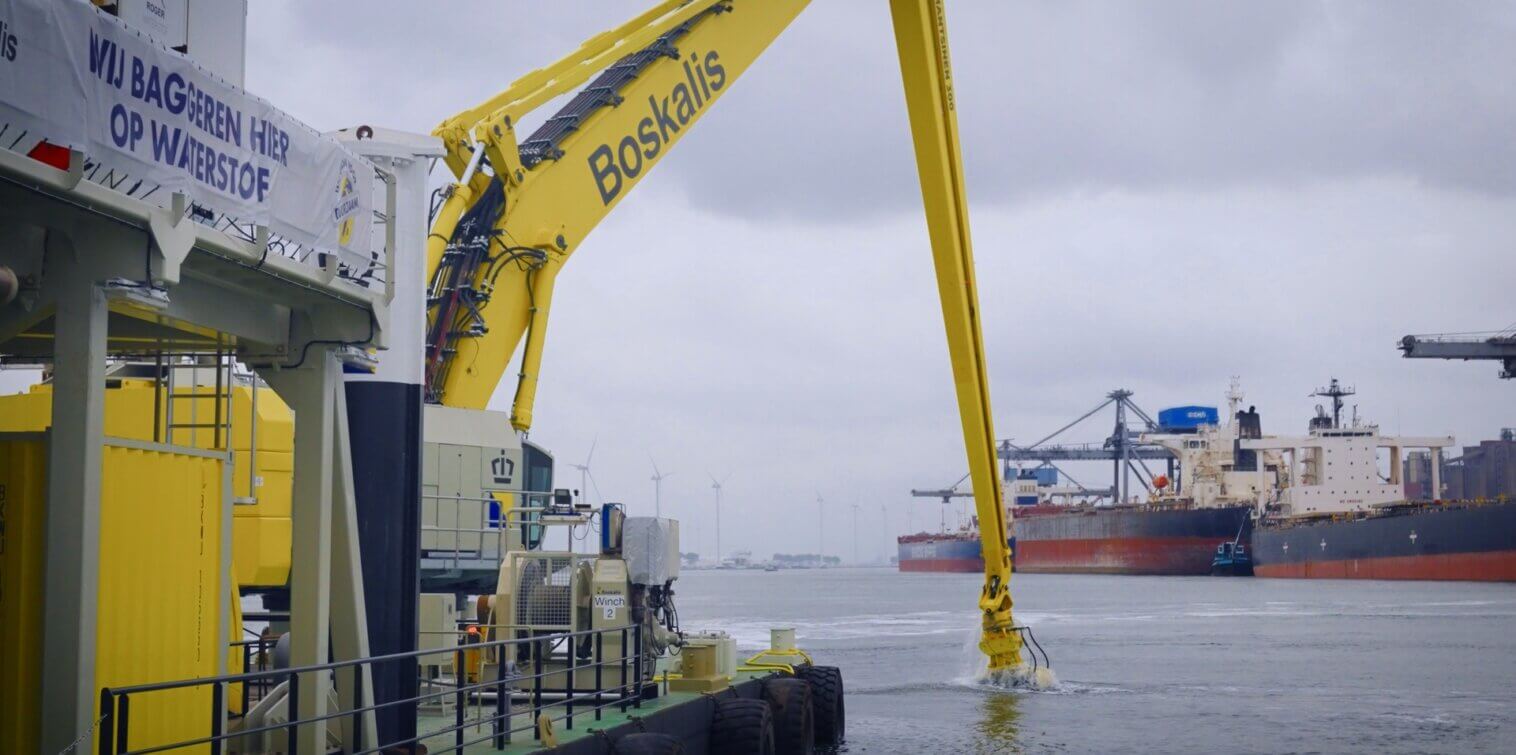
Another example is the Medusa 2, a Boskalis pontoon equipped with a hydrogen fuel cell that converts hydrogen into electricity. This powers a hydraulic crane without harmful emissions. These projects demonstrate that the transition is not theoretical; it is already underway.
Four pillars of progress
Technology
Technological innovation is the first of ZEDhub’s four research pillars. Current projects include research into exhaust gas after-treatment, focusing on reducing CO₂, NOx, SOx, and particulate matter. Other projects explore load buffering in hybrid vessels - smoothing fluctuations to improve engine efficiency - and energy efficiency measures, such as ‘smart dredging’ and reduced sailing speeds.
Economics
These technical measures are closely linked to the second research pillar: economic analysis.
“Reducing speed saves fuel,” Steenbrink explains. “But if you include capital costs, the overall calculation often becomes less favourable.” ZEDhub aims to ensure that innovations contribute to both competitiveness and profitability, identifying scalable solutions and necessary investments.
Regulations and standards
The third research pillar focuses on regulation and standards. Economic feasibility is strongly influenced by taxation and regulatory frameworks such as the EU Emission Trading System (ETS), FuelEU Maritime, and IMO Net Zero guidelines. These determine fuel costs, investment value, and competitive positioning. Understanding these systems is crucial for making informed investment decisions; from fleet renewal strategies to operational optimisation.
Knowledge
The fourth research pillar connects all the dots: knowledge exchange. Operational and safety insights are shared across the network via platforms, community sessions, and student projects. Government support, a.o. through subsidies for educational institutions, again plays a key role in enabling this exchange.
“I find it remarkable what this region offers in terms of concentration and application of knowledge,” says Steenbrink. “It’s such a strong network, containing universities like Delft University of Technology and research institutes such as MARIN, but also the port, shipping, shipbuilding, and the wider supply chain. If you were to map it as a heat map, the focal point of all four research pillars would clearly be the Rotterdam region.”
Developing the market while attracting talent
At its core, ZEDhub is a pre-competitive collaboration. Steenbrink emphasizes that this is essential for strengthening the sector. By sharing knowledge, software, and models, companies maintain their competitive edge while reducing costs. The leverage effect on investments also plays a key role.
“By sharing knowledge and costs, we remain competitive as a sector,” he says. “It also helps when more parties join. That creates a market, a supply chain, and makes projects viable.”
By involving students in real-world projects, and showing them what zero-emission dredging is about, the next generation gains practical experience while the sector secures its future workforce.
“It works both ways,” Steenbrink explains. “You support students in their development, while also providing them practical insights into the industry - increasing the chances that they will pursue a career here.”
Why the Rotterdam region?
For Steenbrink, the answer is clear: “Everything comes together here. Think of institutions such as Delft University of Technology, Deltares, MARIN, and STC, as well as the sea and inland ports, the many shipyards, dredging companies and maritime manufacturers. All of this is concentrated in a relatively small area. That creates a powerful ecosystem where knowledge and practice reinforce each other, particularly in dredging, where the Netherlands - and Belgium - have historically been global leaders. By working together, we can continue to make a difference, especially when it comes to reducing emissions.”
For international companies, this offers unique opportunities: access to knowledge, networks, and a real-world testing ground to bring innovations to market - to move from concept to reality.
Photo credits:
Photos 1 and 3: Thiemo van Dam
Photos 2 and 4: Boskalis